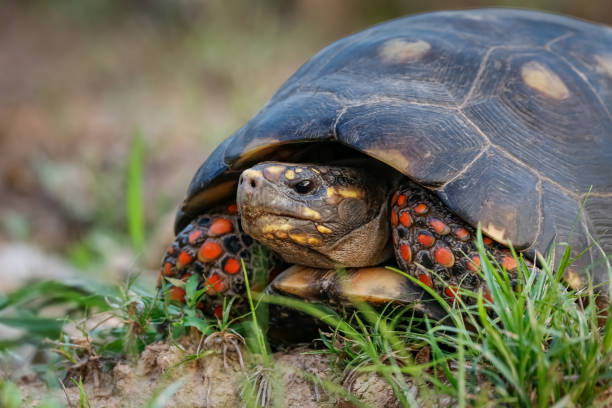
Babies:
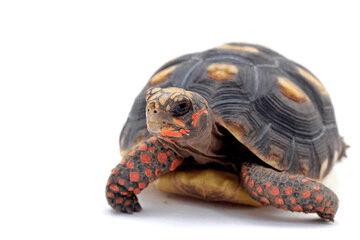
Housing:
A baby Red-foot tortoise should be housed in an indoor enclosure at least 3 feet by 2 feet. As they grow, you’ll need to upgrade the enclosure size. Use a substrate that retains moisture, such as coconut coir, cypress mulch, or a mix of topsoil and play sand. The substrate should be kept moist but not soggy to keep in the humidity. Provide hiding spots using half logs, plants, or other structures. They enjoy a place to hide and feel safe.
Maintain a daytime temperature of 80-90°F with a basking spot around 90-95°F. At night, the temperature can drop to 70-75°F. Mist the enclosure every once in a while to keep the enclosure humid. Use a heat lamp not a heat pad to keep them warm. These tortoises are more expensive than a sulcata tortoise but don’t get as big.
The baby tortoise would need an indoor enclosure with a heat lamp, a food plate, hide (a hollow rock or log that it can hide in), moist part of enclosure, and dry part. A baby tortoise is active and needs a proper enclosure.
Red-foots are frequently kept with others, especially as adults, but they will do fine on their own. Remember that as the tortoise gets bigger, it will become more active and might need more space. I have a yearling red-foot tortoise, so I suggest that you create an outdoor enclosure with boards for the fence. Creating an outdoor enclosure will help them become more comfortable with other environments and give them sun.
Provide a shallow water dish that’s easy to access but large enough for soaking. Change the water daily and ensure it’s clean. Soak your baby tortoise in warm water for 15-20 minutes, 2-3 times a week, to help with hydration and digestion.
Diet:
Feed collard greens, dandelion greens, kale, and fibrous vegetables. Avoid too many fruits since they have a lot of sugar; occasional fruits like strawberries, mango, and papaya are okay as treats. You should also give them protein like mealworms. I have even given Bob (my red-footed tortoise) chicken before. They are omnivores, unlike most tortoises. Dust the tortoises food in calcium 2-3 times a week.
Maintenance:
Spot clean the enclosure daily and replace the substrate every 2-3 months or as needed.
Adults:
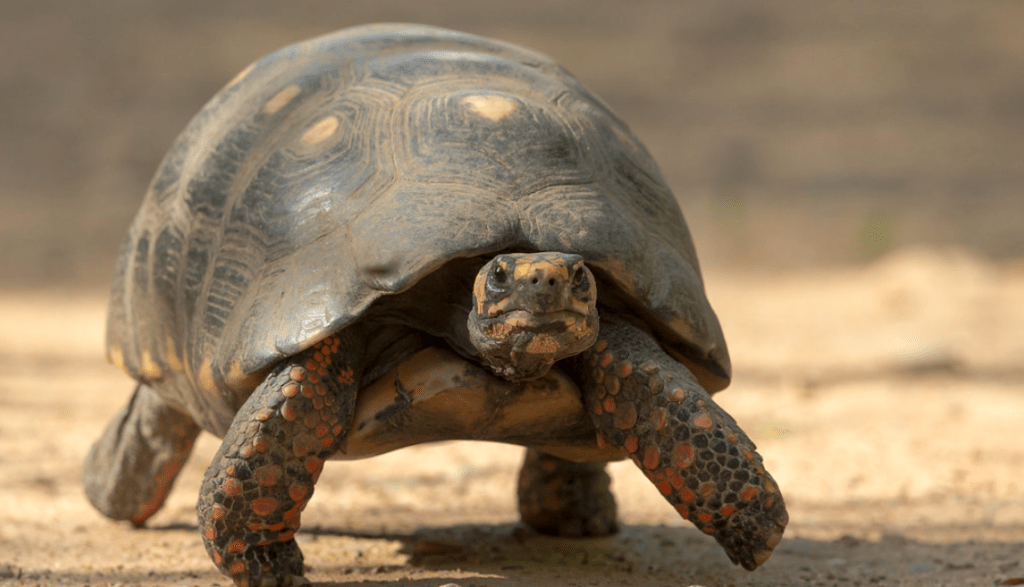
Housing:
For an adult Redfoot tortoise, the enclosure should be at least 6 feet by 4 feet. Outdoor enclosures are ideal if the climate is suitable, but indoor enclosures can work with proper space and conditions.
Use a moisture-retaining substrate like cypress mulch, coconut coir, or a mix of topsoil and play sand. The substrate should be kept damp to maintain the necessary humidity levels. Provide multiple hiding spots, such as half logs or plants, and include objects like rocks, logs, and safe plants to create a good environment. Make sure there aren’t any poisonous mushrooms or plants that the tortoise could eat.
This tortoise cannot protect itself as well as a sulcata can, so make sure you don’t have any animals that can get into the enclosure. Keep a daytime temperatures between 80-90°F with a basking spot around 90-95°F. At night, the temperature can drop to 70-75°F. Outdoor enclosures should provide access to sun and shade to help the tortoise change its body temperature at will.
If you are keeping a tortoise outside, do not keep a heating lamp outdoors. Keep a shed or doghouse-like structure for the tortoise to sleep in with a heating lamp, heat pad, or (preferably) both.
Diet:
Feed a variety of collard greens, dandelion greens, kale, and fibrous vegetables. Avoid too many fruits as they are high in sugar; occasional fruits like strawberries, mango, and papaya are okay as treats. You can also feed them peas .You should also give them protein like mealworms. Keep food on a flat stone or food plate (especially fruits.)
Maintenance:
Spot clean the enclosure daily. Shower them with water every two days, (or create a pond.)
Size:
They can grow over a foot and weigh an upwards of 30 pounds.
 Reyaans blog