
A Sulcata tortoise is an African species of tortoise. They grow massive and can live for a very long time. Being the third largest species of tortoise in the world they need a lot of space requirements.A baby African Spurr-thighed tortoise is tiny. You can fit two or three in the palm of your hand.
Babies:

Housing:
A baby tortoise would need an indoor enclosure with a heat lamp, a food plate, hide (a hollow rock or log that it can hide in), moist part of enclosure, and dry part. A baby tortoise is active and needs a proper enclosure. The temperature should be above 80 degrees at all times. If you see mold in the soil, take it out immediately to avoid respiratory infection. Use a mix of topsoil and play sand, or coconut coir. Avoid substrates that are too dry or too damp. Cypress mulch is also a good option.
Give them a hide to hide under when they are too hot. a basking spot at 95-105°F and a cooler area at around 80°F. Nighttime temperatures should not drop below 70°F or it could be too cold. Make sure you have a heating lamp and UVB to prevent pyramiding. Keep a plate for the tortoise to eat from. Provide a shallow water dish for drinking. Ensure it’s large enough for the tortoise to soak but shallow enough to prevent drowning. Soak your baby Sulcata tortoise in warm water for 15-30 minutes, 3-4 times a week to keep it hydrated.
Remember that a sulcata tortoise is a solitary creature and can be aggressive towards other tortoises. If you have more than one, make sure they have a lot of room to avoid getting stressed out.
Diet:
Base their diet on high-fiber grasses and weeds such as Bermuda grass, Timothy hay, dandelion greens, and clover. Give them vegetables also but avoid giving them spinach. Fruits should be a treat, not given too often. Make sure that no food touches the ground. Sulcata tortoise needs a strictly desert based diet. Dust their food with calcium powder 2-3 times a week to prevent metabolic bone disease and support shell growth.
Maintenance:
Spot clean the enclosure daily and replace the substrate every 2-3 months or as needed.
Adults:

Housing:
You will need a large backyard with proper fencing. With sulcatas, make sure the fence is very strong and there are no holes. Make sure that there is a visual barrier; if the tortoises can see outside, then they know there is something to get to. A sulcata is extremely strong they will damage to walls no matter what. I suggest that you give them a deflated basketball to chase around and let out energy. Sulcata tortoises have been known to burrow. they make hole that can be thirty feet deep.
You should get or create a warm, dry shelter that protects the tortoise from rain, wind, cold, and extreme heat. A doghouse-like structure is ideal. The shelter should be insulated and have a heating source for colder nights. Use a heating lamp or heating pad, or both (preferably both), to keep them warm.
Create the outdoor enclosure to be secure against predators such as dogs, raccoons, and birds. The fencing should be strong and tall enough to prevent other animals from getting in or the tortoise from getting out. Make sure that there are not any poisonous plants around the fence (they will eat anything that looks edible).
Adult Sulcata tortoises can grow up to 100-200 pounds and need a large area to roam. Ideally, provide an outdoor enclosure that is at least 100 square feet per tortoise, though more space is always better. The more room they have to walk, graze, and explore, the healthier they will be.
Add logs, rocks, or gentle slopes to the enclosure to encourage natural behaviors like climbing, digging, and exploring. Give them different biomes such as grass, soil, hay, and leaves.
If you have more than one, make sure they have a lot of room to avoid fights or getting stressed out.Remember that a sulcata tortoise is a solitary creature and can be aggressive towards other animals.

Diet:
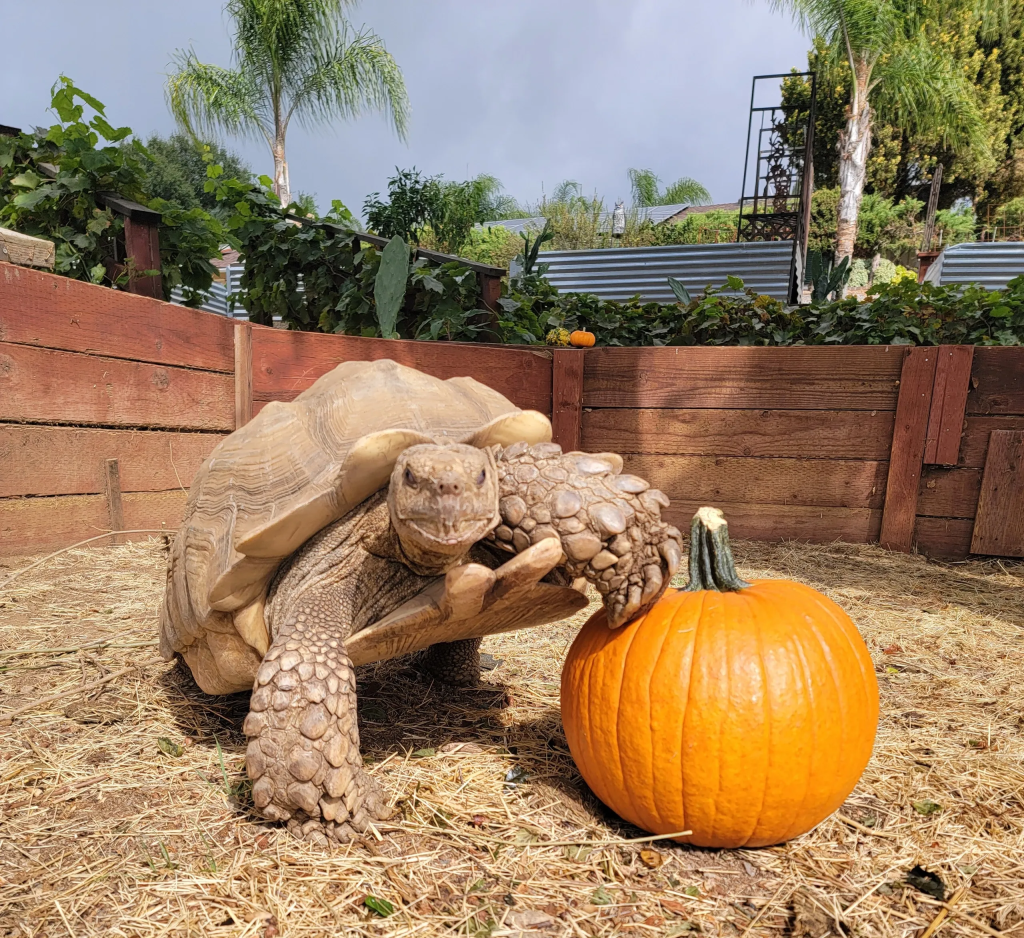
Most of their diet is similar to a baby sulcata. Dust their food with calcium powder 2-3 times a week to prevent metabolic bone disease and support shell growth. Most of their diet should be high-fiber grasses and hay. Since sulcatas are desert tortoises, they can have cactus pads. They may also have squash and pumpkins at the right season when they are larger.
Maintenance:
Clean up their enclosure and take out any left over food that could have fungus in it.
Size:
They can grow three feet and 110 pounds some males can reach 150 pounds.
Credits:
https://en.wikipedia.org/wiki/African_spurred_tortoise
https://mysulcatarescue.org/sulcata-tortoise-care
flickr.com
 Reyaans blog